
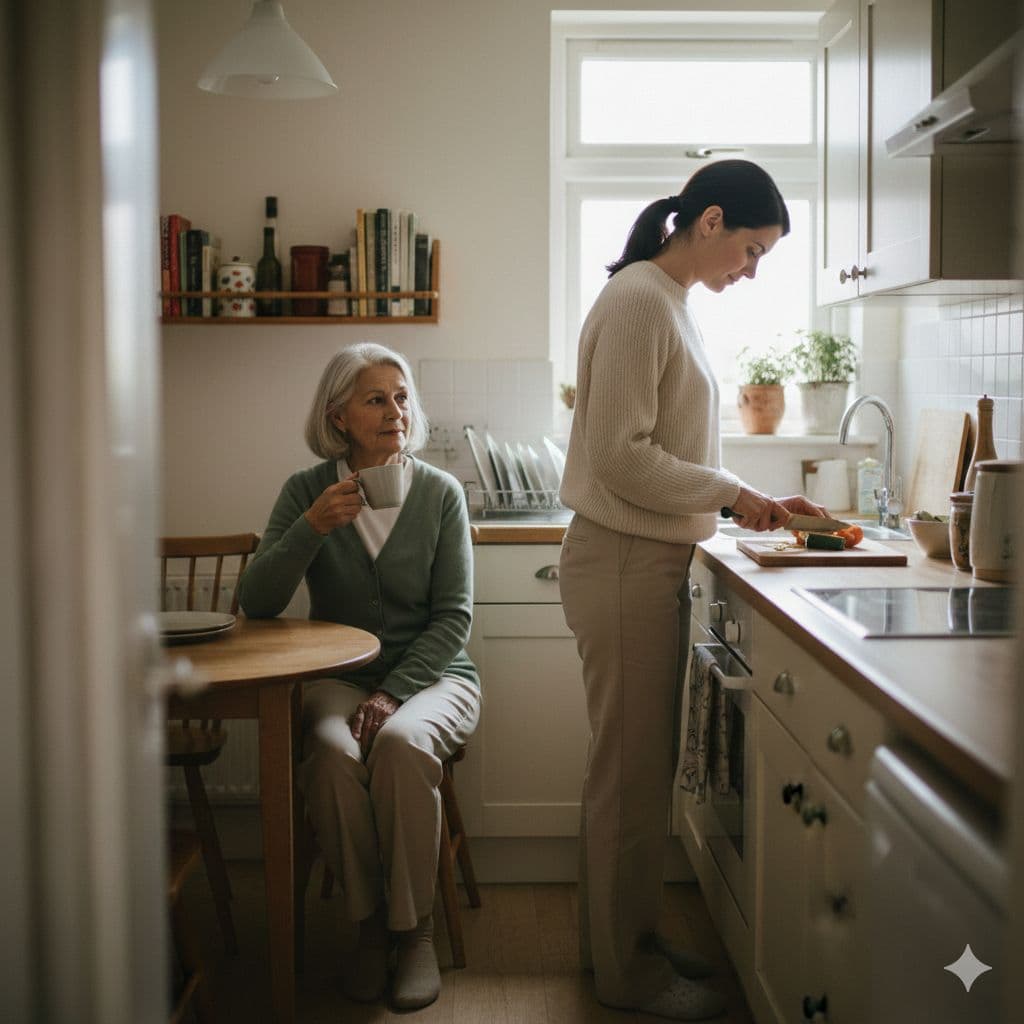
Dementia Care at Home: A Family Guide
Comprehensive guide covering daily routines, communication strategies, behavioral management, and when to transition from family care to professional support.
Read more →Dementia guide
A family resource covering every stage of dementia, from early warning signs to late-stage care, with practical guidance on safety, activities, sundowning, and paying for care in Colorado.
By Jason Shulman, Founder & CEO · Last reviewed:
Free ConsultationUnderstanding Dementia
Dementia is not a single disease; it is an umbrella term for conditions that cause progressive decline in memory, thinking, and reasoning severe enough to interfere with daily life. Alzheimer's disease accounts for 60–80% of cases, but vascular dementia, Lewy body dementia, frontotemporal dementia, and mixed dementia are also common, especially in adults over 65.
In Colorado, an estimated 120,000 peopleare living with Alzheimer's disease, and that number is projected to reach 150,000 by 2030 as the state's senior population grows. The majority of these individuals will be cared for at home by family members, often for years, before professional care becomes necessary.
This guide is for families at any point in the journey. Whether you just noticed your parent forgetting things, are managing sundowning behaviors, or need 24-hour care coordination, we cover what to expect, what helps, and when to call for support.
Disease Progression
Dementia progresses at different rates for every person, but most families will recognize three broad phases. Understanding where your loved one is helps you plan for the right level of care.
Symptoms
Short-term memory lapses, difficulty with complex tasks, word-finding problems, mild disorientation in unfamiliar places
Home Care at This Stage
Companionship, cognitive engagement activities, medication reminders, safety monitoring, transportation to appointments
Typical Hours
3–10 hours/week
Symptoms
Increased confusion, difficulty recognizing family, sundowning, wandering risk, personality changes, need for help with bathing and dressing
Home Care at This Stage
Personal care (ADLs), structured daily routines, fall prevention, behavioral management, caregiver respite for family
Typical Hours
15–40 hours/week
Symptoms
Severe memory loss, loss of verbal communication, inability to walk or sit independently, difficulty swallowing, increased vulnerability to infection
Home Care at This Stage
Full personal care, mobility support, feeding assistance, 24-hour supervision, coordination with hospice and palliative care
Typical Hours
40+ hours/week or 24/7 live-in
Deep Dives
In-depth articles on the specific challenges dementia families face most. Written by our care team based on 14 years of supporting Colorado families.
Comprehensive guide covering daily routines, communication strategies, behavioral management, and when to transition from family care to professional support.
Read more →Why confusion worsens in late afternoon and evening, environmental triggers, and practical strategies that reduce agitation without medication.
Read more →Meaningful activities organized by dementia stage, from complex tasks in early stage to simple sensory experiences in late stage. Focus on the doing, not the result.
Read more →Dementia caregiving is among the most stressful roles in healthcare. Warning signs, self-care strategies, and when respite care becomes essential.
Read more →Short-term relief for dementia caregivers: a few hours, a weekend, or a week. How to arrange respite care and why it prevents burnout crises.
Read more →Parkinson's often involves cognitive decline alongside motor symptoms. Specialized home care considerations for Parkinson's families in Colorado.
Read more →Safety at Home
Falls are the leading cause of injury for seniors with dementia. Wandering is a constant risk. Kitchen accidents increase as judgment declines. Most accidents are preventable with the right home modifications.
Remove loose rugs, install grab bars in bathroom, improve lighting in hallways and stairways, add non-slip mats in shower
Door alarms or chimes, GPS wearable devices, camouflaged door handles, secure outdoor areas, ID bracelet or pendant
Auto shut-off stove devices, lock away sharp knives, simplify countertop to reduce confusion, label cabinets with pictures
Raised toilet seat, shower chair, handheld showerhead, contrasting toilet seat color (easier to see), temperature-limited water heater
Night lights along path to bathroom, bed rails if needed, remove tripping hazards, lock windows if elopement risk
Locked medication cabinet, daily pill organizer with alarms, caregiver-administered medication for middle/late stage
Care Options
Every Colorado CareAssist caregiver receives dementia care training, not just specialists. There is no extra charge for dementia care. One flat rate covers everything.
Bathing, dressing, grooming, toileting assistance, and safe transfers, all with patience and dignity-preserving techniques for dementia patients.
Activities tailored to dementia stage, from puzzles and conversation in early stage to music, scent, and tactile experiences in late stage.
Strategies for agitation, aggression, wandering, and sundowning. De-escalation techniques and environmental modifications that reduce distress.
For middle and late stage dementia, continuous supervision ensures safety around the clock. Shift-based or live-in arrangements available.
Short-term relief for family caregivers. A few hours, a weekend, or a week, whatever you need to recharge and prevent burnout.
A secure online client portal keeps family paperwork in one place, and your care coordinator is reachable by phone. Direct communication with the care coordinator.
Our dedicated dementia care program page: training details, what's included, and how to get started.
Read more →When dementia progresses to the point where supervision is needed around the clock, these are the care models available.
Read more →Temporary relief for family caregivers, essential for preventing the burnout that leads to emergency nursing home placement.
Read more →Paying for Care
Dementia care is a long journey, often 4–8 years, and families need to plan financially. Here are the payment options available in Colorado, from most accessible to most complex.
Most families start here. Colorado CareAssist charges $40–$43/hr depending on your county. No contracts, so adjust hours as needs change.
If your loved one has a LTC policy, it typically covers home care for dementia. We bill the insurance company directly.
Eligible veterans and surviving spouses can receive up to $2,424/month for dementia care. We help with the application at no charge.
Colorado's Medicaid waiver programs can cover some home care for low-income seniors. Wait lists are common, so apply early.
Medicare does NOT cover non-medical home care for dementia. It may cover short-term home health (nursing/therapy) if medically necessary.
Related Guides
When a dementia patient is discharged from the hospital, the transition home is critical. Day-by-day checklist for a safe recovery.
Read more →Managing a parent's dementia care from out of state. Technology tools, communication strategies, and when to bring in local help.
Read more →How to have the conversation when your parent with dementia resists help. Timing, language, and approaches that reduce conflict.
Read more →When is home care enough for dementia, and when should families consider a memory care facility? Decision framework for Colorado families.
Read more →Late-stage dementia often involves hospice. How home care and hospice services work together, and what each provides.
Read more →How to assemble a support team of family, friends, professionals, and community resources, around a loved one with dementia.
Read more →Colorado CareAssist provides dementia care in Boulder and dementia care in Colorado Springs with trained caregivers and a consistent daily routine.
Take the Next Step
Our caregivers are dementia-trained and our care coordinators understand the journey. Free consultation. Call (303) 757-1777.
Our credentials