
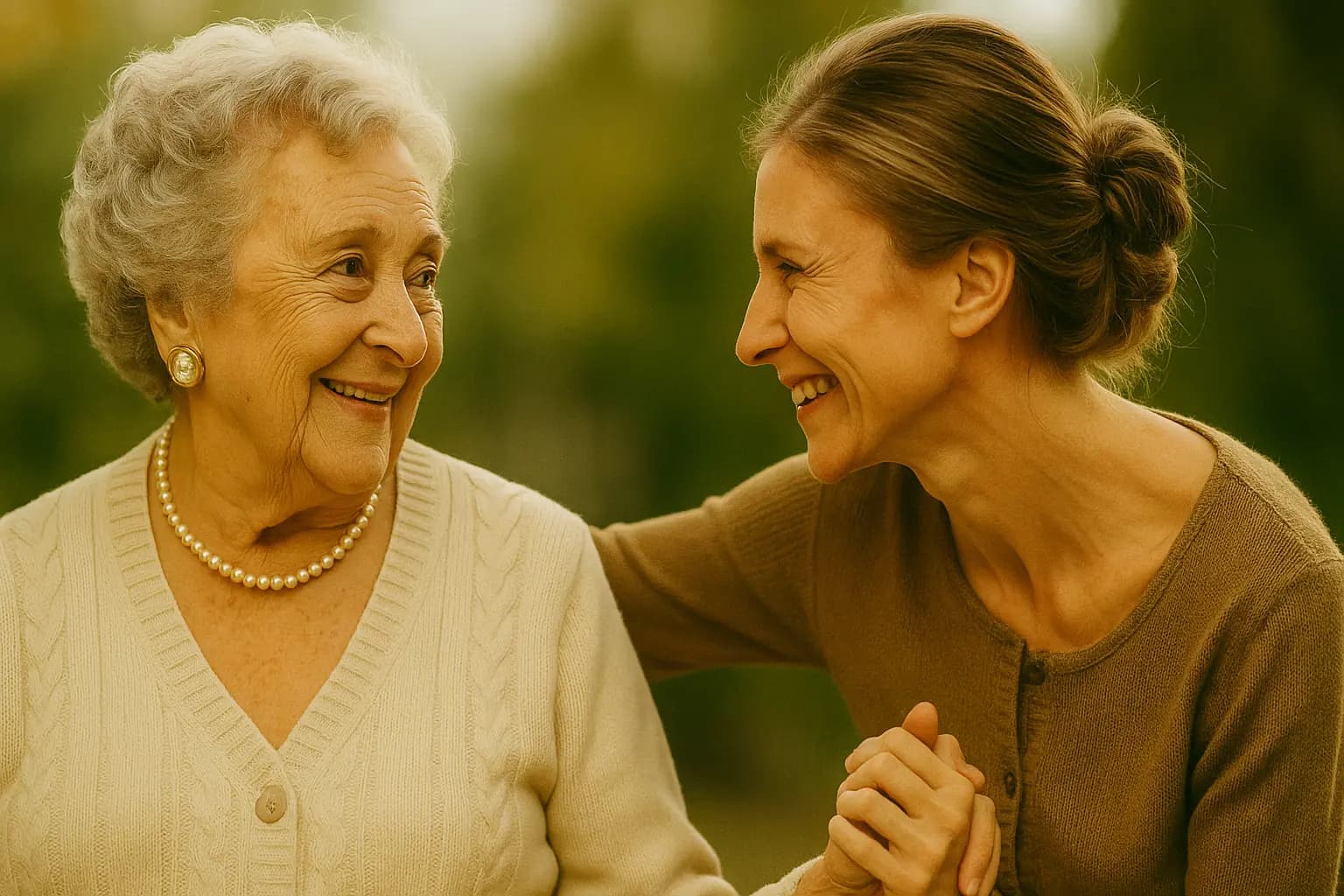
Faith-based care
Faith & Culture Home Care
Caregivers trained to follow your household's practices, not to assume them
Last reviewed:
Every home runs on its own rhythm of food, rest, prayer, memory, and ritual. Good care fits into that rhythm. It never asks the person to fit into ours.
Our discipline is simple: ask the household what it actually observes, rather than assuming from a last name or an accent; documentit, in the person's own words; follow the written instructions on every visit; and never impose a practice the household did not choose.
Our caregivers never bring their own religion or politics into your home.
That single sentence reassures the observant family, the secular family, and the family that is somewhere in between. It is the spine of how we work.
Colorado CareAssist is the operating name of Hesed Home Care LLC. We are a Jewish family, which is exactly why we know what it feels like when nobody asks. We chose hesed as a standard and try to live up to it; we do not claim to have earned the name. That origin is our reason for asking every household, not a boundary on who we serve.
Four things that are true in every tradition
The specifics differ (a kosher kitchen is not a halal kitchen is not a Lenten Friday), but the same four mechanisms show up in every home. They are what make “culturally sensitive care” a real thing instead of a phrase on a brochure.
Fasting and medication safety
Every tradition fasts, and every tradition exempts the sick and the frail. Older adults often fast anyway: Yom Kippur, Lent and Good Friday, the long Orthodox fasts, Ramadan, Fast Sunday. We plan those days with the family in advance rather than discovering them. Never stop, delay, crush, substitute, or change a medication because of a fast or a holiday without instructions from the prescribing clinician. The clinician comes first; clergy can help with meaning and permission.
The memories that outlast conversation
Dementia takes recent memory first and leaves the oldest, most-practiced things longest. A person who can no longer name a close family member may still say a blessing, pray the Rosary, sing a hymn learned in childhood, or follow familiar liturgy. A caregiver who knows which anchor belongs to this person can reach them when ordinary conversation has failed. The mechanism is the same in every tradition; only the anchor differs.
The kitchen, the household's way
We learn the home's rules before the first shift and follow them: kosher and which certifications the family accepts, halal, Lenten abstinence from meat, Orthodox fasting foods, or a Word of Wisdom home with no coffee, tea, or alcohol. We do not substitute products or improvise a standard, and a caregiver who cheerfully offers the wrong drink has simply not been briefed yet.
End of life: whom to call, in what order
This is the section families are most grateful for. We document, in advance and in order, exactly whom to call: the synagogue and the family's chosen Jewish funeral provider, the parish for a time-critical Anointing of the Sick, the Orthodox priest, the pastor and congregation, the mosque or Islamic center. For an unexpected death, caregivers follow emergency-services and agency procedure. Nobody should be deciding in the moment.
Fasting days take extra planning when medication is involved — see our guide to fasting and medication safety for how we plan those days with families and clinicians.
Find your household
Each page goes deep on what that household actually needs. They link to each other on purpose, and parity is the point, and a family should never have to wonder whether the agency is really for them.
Jewish families
Kashrut, Shabbat and the holidays, fasting and Passover medication safety, trauma-informed care for survivors, and support through shiva.
Jewish home care in Colorado→Jewish families in Colorado Springs
Kosher kitchen support, Shabbat-observant scheduling, holiday and fast medication planning, and faith-aware care for households in El Paso County.
Jewish home care in Colorado Springs→Christian families
Catholic, Protestant, Evangelical, and Orthodox: distinct traditions with different needs, from homebound Communion and the Rosary to hymns, scripture, and the icon corner.
Christian home care in Colorado→Muslim families
Halal kitchens, Ramadan medication planning with the prescribing clinician, wudu assistance, prayer times, and prompt, documented end-of-life calls to family and mosque.
Muslim home care in Colorado→Secular and no-faith homes
The largest segment in Colorado. If faith is not part of your home, we do not bring it in. A caregiver who proselytizes is not doing the job, and that reassurance matters to religious families too.
Read the secular-care section→Care in the language your household speaks
Language is not a faith; it is a service capability, and it sits beside this cluster rather than inside it. It matters most when dementia takes a second language first: a bilingual elder can revert entirely to their first language and be left unable to say they are in pain, hungry, or frightened with a caregiver who does not speak it. Most of our caregivers speak Spanish, so care in Spanish is how a large part of our team already works.
Caregivers who speak Spanish
Dementia and the first language, care that supports the family instead of replacing it, the food someone grew up with, and herbal remedies reported to the care manager.
Spanish-speaking home care in Colorado →En español
La misma información escrita en español: la demencia y el primer idioma, el relevo para la familia, la comida de siempre y los remedios caseros informados a la coordinadora de cuidado.
Cuidado en casa en Colorado →If faith is not part of your home, it is not part of the care
Colorado is one of the least religious states in the country, and secular and no-faith homes are the single largest segment we serve, not an afterthought. We do not assume anyone has a faith, and we do not bring religion into a home that has not asked for it. A caregiver who proselytizes is not doing the job. That reassurance runs both ways: an observant family does not want a caregiver of a different faith evangelizing their parent any more than a secular family wants religion introduced at all. Keeping the care about the person, not about anyone's beliefs, is what keeps the whole approach honest.
Every household is served. No caregiver imposes.
Colorado CareAssist serves every household regardless of creed, race, color, national origin, religion, sex, age, or disability.
We staff for competence, not identity: a caregiver trainedin your household's practices. Caregivers are never hired or assigned on the basis of their own faith, and they are never asked to take part in worship. They support and respect the home, and they never bring their own religion or politics into it.
A care profile that works for any home
For every family who wants one, we build a written care profile: kitchen rules and which certifications the household accepts, day-of-rest and worship schedule, clergy and congregation contacts, fasting seasons and the medication plan for those days, meaningful music and rituals, personal-care sensitivities, and end-of-life instructions with whom to call, in what order. Caregivers follow it. They ask rather than assume, and they never impose a practice the client did not choose.
Download the Care Profile (PDF, 7 pages)
Or see all our family guides, or call (303) 757-1777 and we will build the profile with you.
Faith-based and culturally sensitive home care in Colorado
Faith-based and culturally sensitive home care is in-home caregiving that fits a household's own food rules, days of rest, prayers, music, and end-of-life wishes instead of asking the person to fit the agency's routine. Practice varies widely, devout, selectively observant, interfaith, and secular homes are all real, so competent care begins by asking rather than assuming, then writing it down and following it. The discipline is simple: ask, document, follow, and never impose. Caregivers are trained in the practices a household keeps; they support and respect the home and never bring their own religion or politics into it. No medication is ever stopped or changed for a fast or holiday without the prescribing clinician's instruction. Colorado CareAssist, the operating name of Hesed Home Care LLC, a Jewish-family-owned agency, has served Denver, Boulder, Colorado Springs, and the Front Range since 2012.
Questions families ask
Do you only serve Jewish families?
No. We serve every household. Our deep content for Jewish families reflects our own family's origin story, not a boundary on who we care for. We are a Jewish family, which is exactly why we know what it feels like when nobody asks. That is what we bring to a Catholic, Protestant, Orthodox, Muslim, Hindu, Buddhist, interfaith, or fully secular home: we ask instead of assume.
How do you handle a faith or culture that is not your own?
The same way we handle our own: ask the household what it actually observes, document it in the person's own words, follow it on every visit, and never impose a practice the household did not choose. Caregivers are trained in the practices a household keeps. Where we are unsure of a practice, we ask the household rather than guess or rule on it.
Will a caregiver practice their own religion with my parent?
No. Our caregivers support and respect your household's practice. They are never required to participate in worship or profess anything, and they never introduce their own. Our caregivers never bring their own religion or politics into your home.
What if our home is not religious at all?
Then religion is not part of the care plan, full stop. Colorado is one of the least religious states in the country, and secular and no-faith homes are a first-class part of how we work. For a home that has not asked for it, we do not bring religion in.
How do you handle fasting when a parent takes medication?
We plan fasting days with the family in advance. No medication is ever stopped, delayed, crushed, substituted, or changed because of a fast or holiday without instructions from the prescribing clinician. The clinician comes first on anything medical; clergy can help with meaning and permission.
Can eligible veterans of any faith use VA benefits?
Colorado CareAssist is a VA Community Care provider. Eligible veterans may receive authorized in-home care through the VA. Eligibility, approved hours, and any cost-sharing are determined by the VA, not by us, and they vary by veteran.
Where in Colorado do you provide this care?
We serve families across Denver, Boulder, Colorado Springs, and the Front Range, from a few hours a week to around-the-clock and live-in care.
Take the Next Step
Tell us how your home runs
No pressure, no contracts. Tell us what matters to your family and we will tell you honestly how we would care for it.