
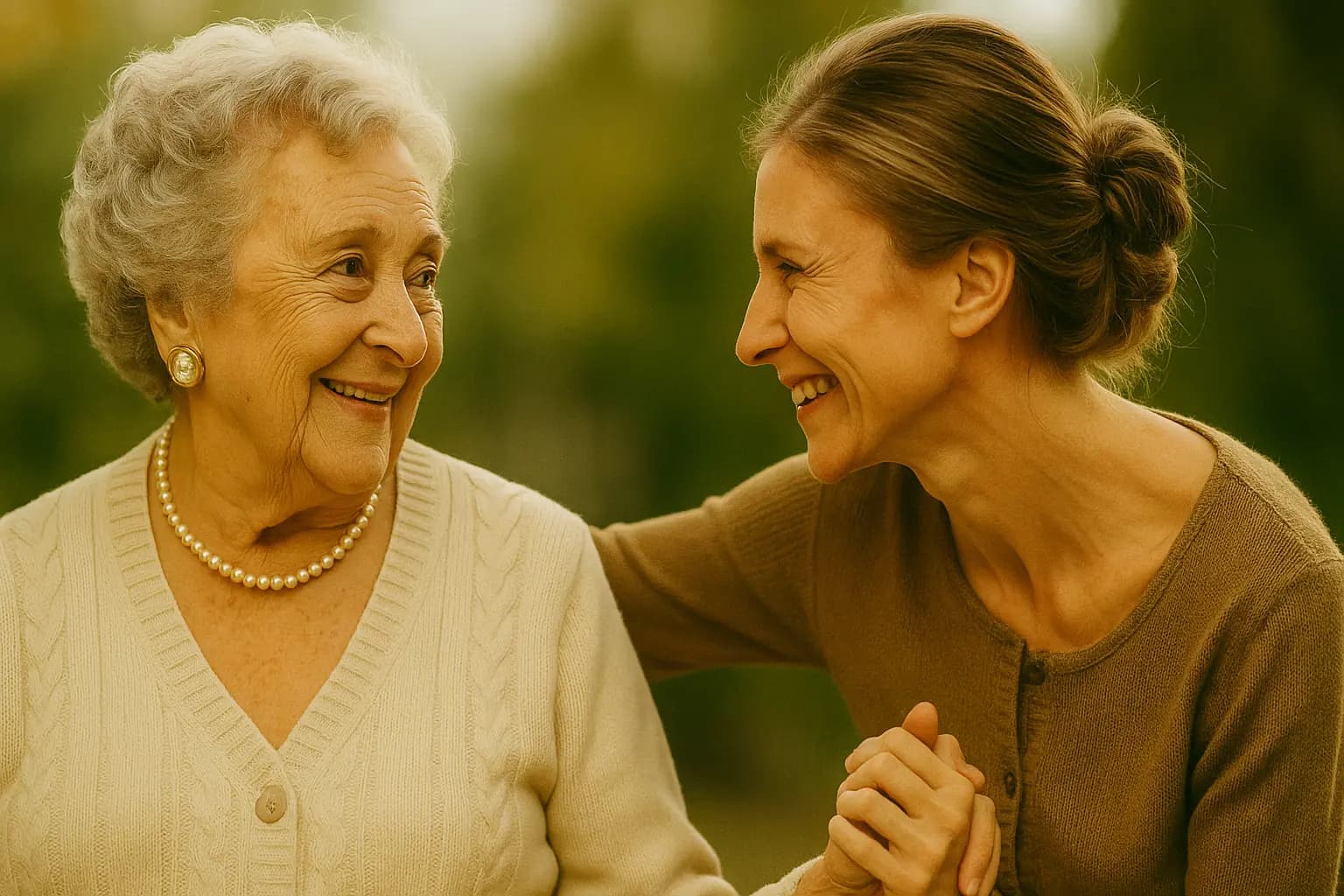
Spanish-speaking care
Home Care with Caregivers Who Speak Spanish
Care in the language your parent thinks in
In dementia, a second language is often lost first. A bilingual elder who spoke English for fifty years can revert entirely to Spanish, and with an English-only caregiver, end up effectively mute in their own home, unable to say they are in pain, hungry, or frightened.
That is the center of this page. A caregiver who speaks your parent's first language is not a convenience or a courtesy. It is the difference between company and mere supervision: someone who can hear “me duele aquí” and know what to do next.
Most of our caregivers speak Spanish. That makes this page different from a promise any agency could write: the claim and the roster agree. Language is a skill we staff and schedule for, in Denver, Boulder, Colorado Springs, and across the Front Range.
This page sits beside our faith- and culture-sensitive home care approach, because language is a service capability rather than a creed. Many of the families we serve in Spanish are Catholic or Evangelical. See how we care for Christian families, and some keep no faith at all. We ask rather than presume.
What that means in practice
Speaking the language is the entry point, not the whole job. These are the things a caregiver who speaks Spanish can actually do in your parent's home.
When dementia takes English first
A second language is often the first thing dementia takes. A bilingual elder who spoke English for fifty years can lose it entirely and revert to Spanish, effectively mute in their own home with an English-only caregiver, unable to say they are in pain, hungry, or frightened. A caregiver who speaks their first language is not a convenience. It is the difference between company and mere supervision.
Help that lets the family keep caring
Many families carry a real guilt about hiring outside help. We do not hire strangers to care for our mother. We hear that, and we agree with what is underneath it: the family is the care. Our role is respite and backup, rest for the daughter who has been doing everything alone, so the family can keep caring without burning out.
The food someone grew up with
A caregiver who can cook the food your parent grew up with matters more than it sounds. Familiar food brings appetite back, steadies a hard day, and reaches a person with dementia when words cannot. Tell us what your parent loves, and we will cook it their way.
Herbal and folk remedies, reported, never judged
Many households use herbal teas and folk remedies alongside prescribed medication, and some combinations genuinely interact. The caregiver's job is awareness without judgment: report what the person is actually taking to the care manager and the clinician. No medication is ever stopped or changed without the prescribing clinician.
Faith, if your household keeps it
Many families we serve are Catholic, a growing share are Evangelical or Pentecostal, and some keep no faith at all. Las Posadas, Día de los Muertos, and Three Kings Day are meaningful to many households, and we never presume which home is which. We ask, we document, and we follow. See how we care for Christian families in detail.
Care documented in the language you use
The care plan, the daily notes, and the conversation all work in the language the household prefers. If a daughter manages the care in English but her mother lives in Spanish, both are covered, and nothing important gets lost between the two.
Most of our caregivers speak Spanish
Roughly a fifth of Colorado is Hispanic or Latino, and Spanish-speaking care should not be a special request. Most Colorado CareAssist caregivers speak Spanish, so care in Spanish is not something we scramble to arrange; it is how a large part of our team already works. When you call, tell us the language your parent is most comfortable in, and we will schedule caregivers who speak Spanish from the first visit.
For veterans, VA-authorized care may be available
Colorado CareAssist is a VA Community Care provider with an established authorization and billing process. Eligible veterans may receive authorized in-home care through the VA. Eligibility, the number of approved hours, and any cost-sharing are determined by the VA, not by us, and they vary from veteran to veteran. What we can do is tell you honestly whether it is worth pursuing and help with the referral and authorization paperwork, in English or Spanish. Learn more about VA home care, or call (303) 757-1777 and we will walk you through it.
Spanish-speaking home care in Colorado
Spanish-speaking home care in Colorado is in-home caregiving delivered in the language the older adult is most comfortable using, and it matters most when English is no longer available. In dementia, a second language is often lost first: a bilingual elder who spoke English for decades can revert entirely to Spanish and be unable to tell an English-only caregiver that they are in pain, hungry, or frightened. Most Colorado CareAssist caregivers speak Spanish, so the care, the conversation, and the care plan can all happen in the household's language. That includes cooking the food someone grew up with, reporting herbal or folk remedies to the care manager because they can interact with prescribed medication, and asking, never presuming, about faith, whether a family keeps Las Posadas, Día de los Muertos, or Three Kings Day, or none at all. Colorado CareAssist serves Denver, Boulder, Colorado Springs, and the Front Range.
Questions families ask
Do most of your caregivers really speak Spanish?
Yes. Most Colorado CareAssist caregivers speak Spanish, which is exactly why this page exists: the claim and the roster agree. Language is a skill we staff and schedule for. Tell us the language your parent is most comfortable in and we will build the schedule around it.
My mother has dementia and is losing her English. Can you help?
This is more common than families expect. In dementia, a second language is often lost first, and a bilingual person can revert entirely to their first language. With an English-only caregiver she can end up unable to say she is in pain, hungry, or frightened. A caregiver who speaks Spanish can follow her conversation, catch what she needs, and give her back company instead of mere supervision.
Our family feels guilty about hiring help. Is that normal?
Very normal, and very common. A strong family-caregiving tradition can make outside help feel like failing your parent. We see it the other way: good help is what lets the family keep caring. Respite for the exhausted daughter is not replacing her; it is what keeps her able to be the daughter instead of only the caregiver.
Do you serve Catholic or Evangelical families?
Yes, and we never presume which household is which. Many families we serve are Catholic, a growing share are Evangelical or Pentecostal, and some keep no faith. Las Posadas, Día de los Muertos, and Three Kings Day are planned for in homes that keep them. For the faith side of care (Mass, the Rosary, homebound Communion, hymns), see our Christian home care page.
My father takes herbal remedies along with his prescriptions. Is that a problem?
It can be, and it is manageable. Some herbal and folk remedies interact with prescribed medication. Our caregivers report what the person is actually taking to the care manager and the clinician, with awareness, never judgment, and no medication is ever stopped, delayed, or changed without instructions from the prescribing clinician.
Can eligible veterans use VA benefits?
Colorado CareAssist is a VA Community Care provider with an established authorization and billing process. Eligible veterans may receive authorized in-home care through the VA. Eligibility, approved hours, and any cost-sharing are determined by the VA, not by us, and they vary by veteran.
Where in Colorado do you serve Spanish-speaking families?
We serve families across Denver, Boulder, Colorado Springs, and the Front Range, from a few hours a week to around-the-clock and live-in care. Call (303) 757-1777 for Denver and Boulder, or (719) 428-3999 for Colorado Springs and Pueblo.
Take the Next Step
Tell us what language your parent lives in
No pressure, no contracts. Call (303) 757-1777 for Denver and Boulder, or (719) 428-3999 for Colorado Springs and Pueblo, in English or Spanish, seven days a week.