
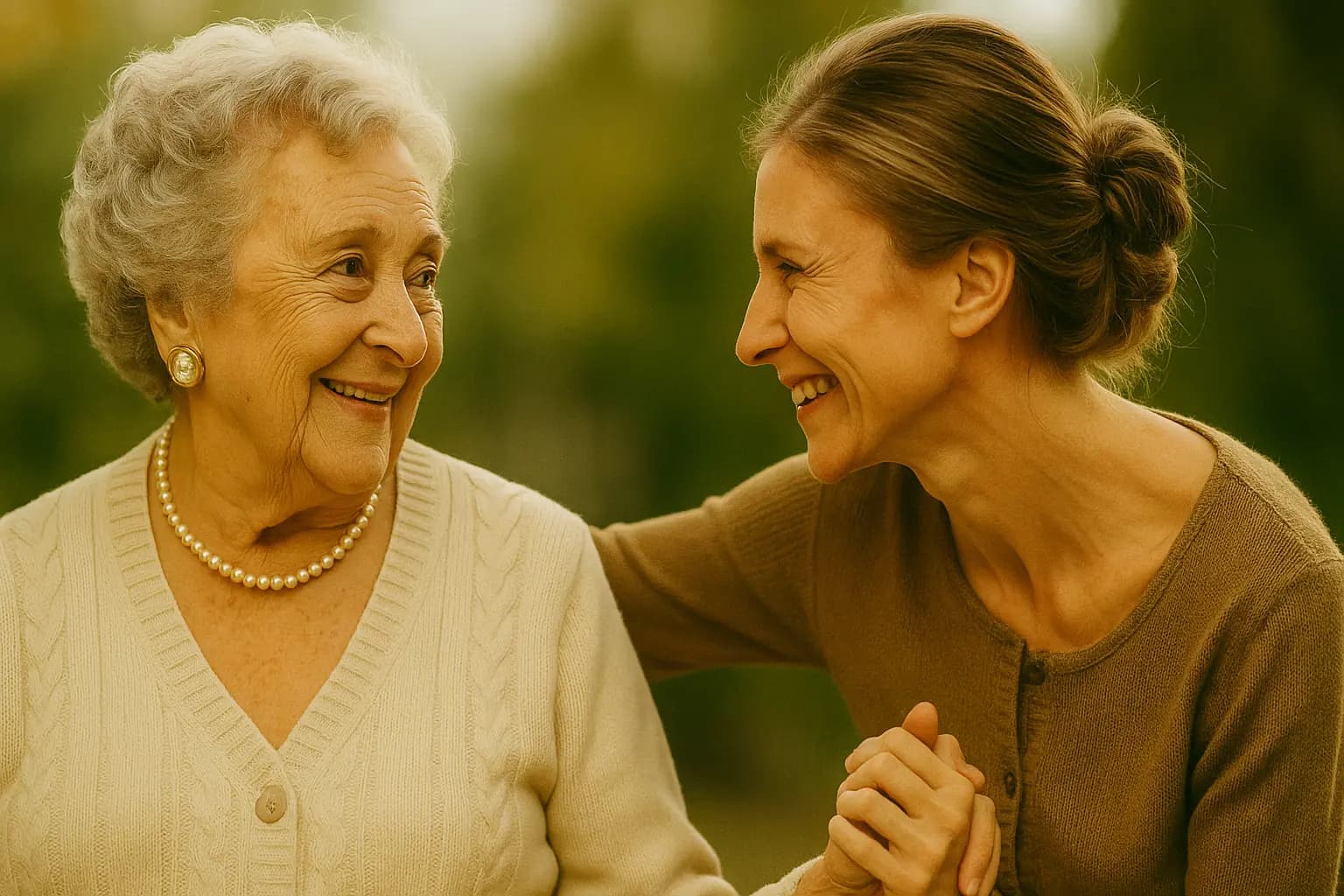
Christian home care
Home Care for Christian Families
Catholic, Protestant, Evangelical, and Orthodox: distinct traditions, cared for distinctly
Christian is not one thing. A Catholic grandmother who prays the Rosary and a Baptist grandfather who sings from a hymnal do not need the same care, and a page that pretends they do helps neither of them.
This page is part of our faith- and culture-sensitive home care approach. We also serve Jewish families and Muslim families, and the links between these pages are deliberate: a family should never have to wonder whether the agency is really for them.
Colorado CareAssist is the operating name of Hesed Home Care LLC. We are a Jewish family, which is exactly why we know what it feels like when nobody asks. We ask your household what it actually observes, document it, follow it, and never impose a practice you did not choose. Caregivers are trained in the practices a household keeps; they support and respect your home and never bring their own religion or politics into it.
For Catholic families
The sacraments, the parish, and a devotion that often becomes the most durable thing a person with dementia still holds. The single most important thing to get right is also the most time-sensitive.
The Anointing of the Sick is time-critical
Families are devastated when the priest is called after death instead of before. A caregiver who knows to call the parish while the person is still living has done something no one else on the care team did. We document whom to call, in advance and in order, including Viaticum, Communion for the dying.
Homebound Communion
Brought by a priest, deacon, or an Extraordinary Minister of Holy Communion from the parish. The caregiver's job is to know it is coming, prepare the space if the family wishes, and not interrupt.
Mass and Holy Days of Obligation
If getting to Mass is no longer possible, televised or streamed Mass matters enormously. While it is still possible, transport to Sunday Mass and Holy Days is part of keeping a person connected to their life.
The Rosary
A powerful devotion and an exceptional anchor for a person living with dementia: familiar, rhythmic, and durable long after ordinary conversation becomes difficult.
Lent, fasting, and abstinence
The Church exempts the sick and the elderly; many will fast or give up meat regardless. We plan Lenten Fridays in advance so a meatless meal still includes protein, enough calories, and any medication that must be taken with food. No medication is ever changed for a fast or holiday without the prescribing clinician.
Sacramentals in the home
A crucifix, holy water, statues, blessed palms. We do not rearrange, tidy away, or discard them. What looks like clutter to one person is sacred to another.
For Protestant and Evangelical families
For many families the church is the social world, and hymns are the last thing memory lets go. The range of denominations is wide, so we ask rather than generalize.
The church is the social world
Losing Sunday attendance is not only a religious loss. It is the onset of isolation. Transport to Sunday service, midweek Bible study, and small group while it is still possible; streamed services when it is not.
Hymns endure
This is the strongest point in the section. People who can no longer converse will still sing Amazing Grace, How Great Thou Art, or The Old Rugged Cross. A caregiver who knows the hymn that belongs to this person can reach them when words have failed.
Scripture, devotionals, Christian radio and television
Reading scripture or a devotional aloud, or putting on a familiar program, can structure a hard day and calm an anxious one.
The congregation wants to help, sometimes too much
Pastor visits and a prayer chain are a gift and can also overwhelm a frail person. The practical value we add is helping the family coordinate visitors so a well-meaning stream of people does not exhaust the very person they came to bless.
Prayer at meals
A client may ask a caregiver to pray with them. Our line holds: caregivers respect and support the household's practice; they are never required to participate or profess, and they never introduce their own.
The denominational range is enormous
Baptist, Methodist, Lutheran, Presbyterian, non-denominational, Pentecostal. These are not interchangeable, and some households are teetotal with no alcohol in the home. We do not generalize. We ask.
For Orthodox families
Greek, Russian, Antiochian, Serbian: real communities across Denver, with a fasting calendar that is long and strict and a home altar that is sacred.
Fasting is long and strict
Great Lent runs about seven weeks, the Nativity Fast forty days, with many Wednesdays and Fridays besides. For a frail elder this is the most consequential practical point: weight loss, muscle loss, weakness, and medication meant to be taken with food. We treat it as a weeks-long plan with the clinician before the fast begins, not a single morning.
The icon corner is sacred
A home altar or icon corner is not a shelf. We do not move icons, clean them casually, or set objects there.
The priest, Holy Unction, and homebound Communion
Communion brought to the homebound is often preceded by fasting, so it has to be coordinated with meals and medication. Holy Unction and the priest's visits are documented so the caregiver knows what to expect and not to interrupt.
Christmas may be January 7
Some parishes (Greek, Russian, Antiochian, Serbian, all real communities in Denver) follow the Julian calendar. We never assume December 25, and we plan around the calendar the household actually keeps.
Members of The Church of Jesus Christ of Latter-day Saints
We ask the household and document what matters to them; we do not assume. The practical competencies are real and rarely trained on. A Word of Wisdom home means no coffee, no black or green tea, and no alcohol. A caregiver cheerfully offering a nice cup of tea is a genuine and common misstep. Temple garments are a personal-care dignity matter we treat with respect and never remove casually. Fast Sunday folds into the same fasting-and-medication planning we use across every tradition.
End of life: whom to call, in what order
This is the section families are most grateful for, and for Christian families it is often the most time-sensitive. We document, in advance and in order: the parish for a time-critical Anointing of the Sick, the Orthodox priest for Holy Unction, the pastor and the congregation that will want to mobilize. For an unexpected death, caregivers follow emergency-services and agency procedure. Nobody should be deciding in the moment. When a family wants the care plan reviewed with both their priest or pastor and their clinician, caregivers follow the documented plan and the clinician's orders, and we point medical and doctrinal questions back to the family's own clinician and clergy rather than ruling on them ourselves.
For Christian veterans, VA-authorized care may be available. Learn more about VA home care, or call (303) 757-1777 and we will walk you through it.
Christian home care in Colorado
Christian home care in Colorado is in-home caregiving that respects a household's Christian practice without assuming one denomination fits all. Catholic, Protestant, Evangelical, and Orthodox families observe differently, and many homes are interfaith or selectively observant, so care begins by asking rather than assuming. For Catholic families that can mean planning around Mass, homebound Communion, the Rosary, Lent, and the time-critical Anointing of the Sick. For Protestant and Evangelical families it often centers on Sunday service, hymns, scripture, and a congregation that wants to help. For Orthodox families it means long fasting seasons, a sacred icon corner, and a calendar where Christmas may fall on January 7. Caregivers are trained in the practices a household keeps, support and respect the home, and never bring their own religion or politics into it. No medication is ever stopped or changed for a fast or holiday without the prescribing clinician. Colorado CareAssist serves Denver, Boulder, Colorado Springs, and the Front Range.
Questions families ask
Do you serve Catholic, Protestant, and Orthodox families?
Yes, and we treat them as the distinct traditions they are. A Catholic family's needs around Mass, homebound Communion, and the Anointing of the Sick are different from an Evangelical family's around Sunday service and hymns, which are different again from an Orthodox family's long fasting seasons and icon corner. The specificity is the product.
Why does the Anointing of the Sick come up so much?
Because it is time-critical, and families are devastated when the priest is called after death instead of before. A caregiver who knows to call the parish while the person is still living has done something no one else on the care team did. We write down whom to call, in what order, before the moment.
How do you handle so many different denominations?
By asking rather than assuming. Denominational practice varies widely, and many homes are interfaith or selectively observant. We document what this household actually keeps and follow it. Where we are unsure of a practice, we ask the household. We do not guess or rule on it.
Will a caregiver pray with my parent if asked?
Caregivers respect and support the household's practice. They are never required to participate in worship or profess anything, and they never introduce their own. Our caregivers never bring their own religion or politics into your home.
How do you handle fasting when a parent takes medication?
We plan fasting seasons (Lent, the long Orthodox fasts, Fast Sunday) with the family in advance. No medication is ever stopped, delayed, crushed, substituted, or changed because of a fast or holiday without instructions from the prescribing clinician. The clinician comes first; clergy can help with meaning and permission.
What about members of The Church of Jesus Christ of Latter-day Saints?
We ask the household and document what matters to them. The practical competencies are real and rarely trained on: a Word of Wisdom home means no coffee, no black or green tea, and no alcohol. A caregiver cheerfully offering a cup of tea is a genuine misstep. Temple garments are a personal-care dignity matter we treat with respect. Fast Sunday folds into the same fasting-and-medication planning we use across traditions.
Can eligible Christian veterans use VA benefits?
Colorado CareAssist is a VA Community Care provider. Eligible veterans may receive authorized in-home care through the VA. Eligibility, approved hours, and any cost-sharing are determined by the VA, not by us, and they vary by veteran.
Take the Next Step
Tell us what your household keeps
No pressure, no contracts. Tell us what matters to your family and we will tell you honestly how we would care for it.